8 Signs Your Chicago Home Needs an Electrical Update | E&P Electric
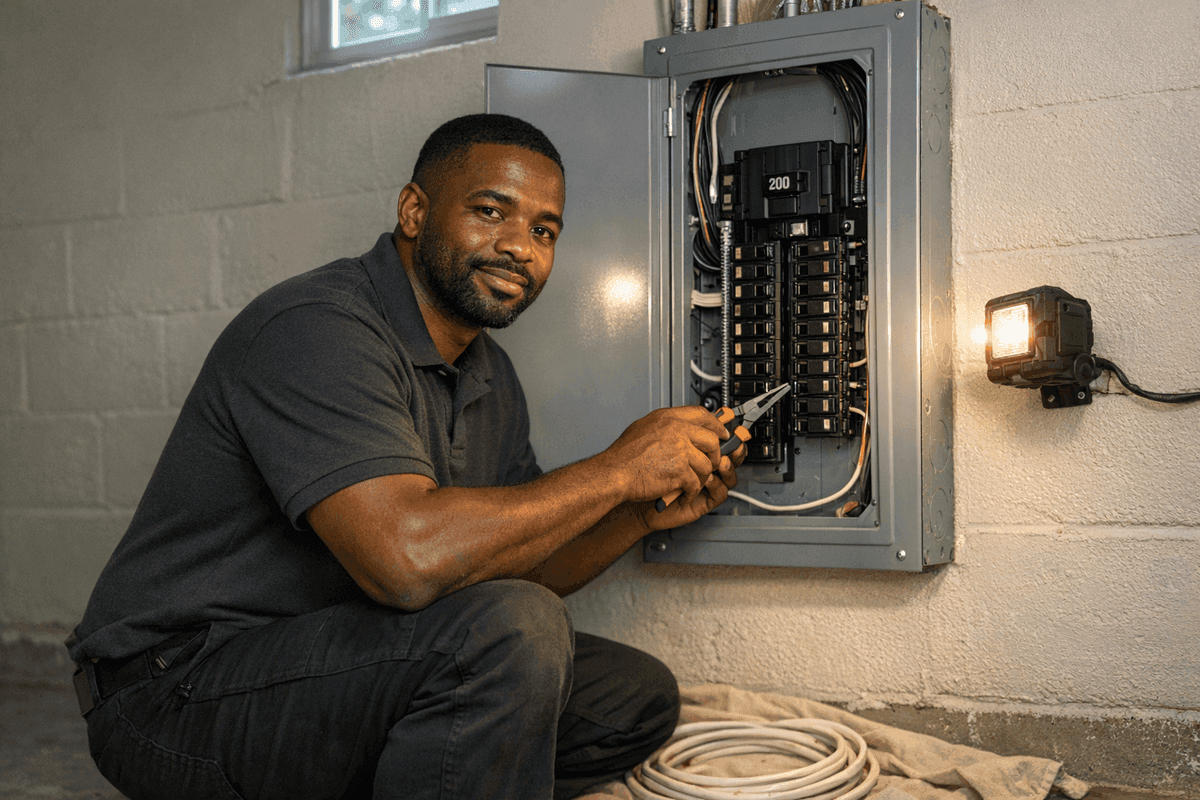
Your electrical system is the backbone of your home's safety and function. Outdated, deteriorating, or undersized electrical systems cause:
- Fire hazards (loose connections, overheating wiring)
- Shock risks (faulty grounding, damaged insulation)
- Appliance damage (voltage fluctuations, power surges)
- Inconvenience (breaker trips, insufficient outlets, weak lighting)
- Home value loss (insurance requirements, inspection failures, buyer concerns)
Chicago homes—many built in the 1920s–1970s—often have outdated electrical systems struggling to meet modern demands.
Sign 1: Flickering or Dimming Lights
What It Means
Flickering lights indicate intermittent electrical supply to fixtures. This could be:
- Loose connection in the outlet, light fixture, or wire splice (fire hazard)
- Undersized circuit (voltage drops when other appliances run)
- Utility issue (ComEd problem, less common but possible)
- Bulb issue (poor contact, incorrect bulb type)
When It's Serious
Serious if:
- ✓ Lights flicker when specific appliance runs (AC, heater, washing machine)
- ✓ Entire room or multiple rooms flicker
- ✓ Dimming is sudden or getting worse
- ✓ Bulb replacement doesn't fix it
What to Do
- Try replacing the bulb (might be loose or failing)
- If problem persists, call E&P Electric (loose connection diagnosis needed)
- Document when flickering occurs (certain appliances make it worse?)
Timeline: Call within 1–2 weeks if flickering is consistent.
Sign 2: Warm or Hot Outlets
What It Means
Warm outlets indicate excessive resistance in the electrical connection. Electricity converted to heat = fire hazard.
Causes:
- Loose outlet inside the wall (connection arcing internally)
- Overloaded outlet (too many devices, or wrong outlet type)
- Damaged outlet (internal components degraded)
- Faulty wiring (short somewhere in circuit)
When It's Serious
Very serious. Call immediately if:
- ✓ Outlet is hot to touch (not just warm)
- ✓ Burning smell near outlet
- ✓ Discoloration or scorch marks visible
- ✓ Outlet is in wet area (bathroom, kitchen)
What to Do
- Stop using the outlet immediately (unplug everything)
- Do not touch outlet if too hot
- Call E&P Electric (24/7 emergency number for fire hazard)
- Document by taking a photo (before electrician arrives)
Timeline: Call immediately (same day, preferably within hours).
Sign 3: Frequent Breaker Trips
What It Means
Breakers trip to protect your home from overcurrent (too much electricity flowing). Frequent trips mean:
- Overloaded circuit (too many appliances on same circuit)
- Short circuit (wiring insulation damage, internal fault)
- Faulty breaker (failing to regulate current properly)
- Undersized circuit (home's electrical demand exceeds panel capacity)
Common Scenarios
Kitchen breaker trips when using microwave + other appliances:
- Kitchen circuit is overloaded
- Modern kitchens need multiple dedicated circuits
Bathroom breaker trips when using space heater + hair dryer:
- Bathroom circuit insufficient for high-draw appliances
- Dedicated circuit needed or space heater must be moved elsewhere
Entire home loses power randomly:
- Main breaker may be failing
- Panel capacity exceeded
- Serious issue requiring panel assessment
When It's Serious
Call electrician if:
- ✓ Breaker trips multiple times per day
- ✓ Breaker immediately trips after resetting
- ✓ Breaker is warm or shows discoloration
- ✓ Burning smell associated with breaker
What to Do
- Identify which circuit is tripping (which breaker is OFF?)
- Unplug devices from that circuit (reduces load)
- Reset breaker and monitor (does it hold?)
- If trips again immediately, call electrician (circuit fault)
- If trips intermittently, document pattern (which appliances trigger it?)
Timeline: 1–2 weeks if intermittent; immediately if frequent or breaker won't reset.
Sign 4: Two-Prong Outlets (No Grounding)
What It Means
Two-prong outlets (ungrounded) lack the third prong (ground wire). This creates shock hazard in wet areas and prevents use of modern three-prong appliances.
When is it a problem:
- ✓ Outlets in bathrooms (moisture + electricity = shock risk)
- ✓ Outlets in kitchen (water exposure near sink)
- ✓ Outlets in basement or laundry room
- ✓ Any outlet near water source
Code requirement: Chicago code requires three-prong (grounded) outlets in wet areas.
Modern Appliances
Many modern appliances require three-prong:
- Computer, printer, monitor
- Microwave
- Toaster, coffee maker
- Power tools
- Hair dryer, straightener
What to Do
- Replace two-prong with three-prong outlet ($150–$300 per outlet, professional installation)
- Use adapter plug (NOT safe for wet areas; temporary solution only)
- Avoid multi-outlet adapters (increasing fire hazard)
Timeline: Replace within 3–6 months, especially in bathrooms/kitchen.
Sign 5: Outlets Not Working / Dead Outlets
What It Means
Dead outlets (no power) indicate:
- Tripped breaker (check panel, reset)
- Tripped GFCI (bathroom/kitchen outlets with reset button)
- Outlet damage (internal failure, loose connection)
- Circuit wire damage (broken wire somewhere in the circuit)
- Loose connection at panel (uncommon but serious)
Diagnosis
- Check if breaker is OFF (panel inspection)
- Check if GFCI is tripped (look for red RESET button)
- Test adjacent outlets (is whole circuit dead or just one outlet?)
- Call electrician if problem persists
What to Do
- Reset breaker or GFCI
- If power restores, monitor (does it trip again immediately?)
- If problem continues, call electrician within 24 hours
- Never force breaker back on repeatedly (fire hazard)
Timeline: 24 hours for professional assessment.
Sign 6: Burning Smell or Visible Scorch Marks
What It Means
Burning smell and scorch marks indicate:
- Wiring overheat (loose connection, short circuit)
- Outlet or switch failure (internal arcing)
- Appliance fire (faulty device, not electrical)
- Panel issue (breaker overheating)
This Is a Fire Hazard
Smell burning, see scorch:
- Call 911 if fire is visible
- Evacuate if burning smell is strong
- If minor smell, call E&P Electric immediately (24/7)
- Don't use outlets in that area
What to Do
- Identify source (which outlet, switch, or appliance?)
- Unplug device if it's appliance-related
- Don't use outlet/switch
- Call electrician same day
- Take photo for insurance documentation
Timeline: Emergency (within hours, not days).
Sign 7: Electrical Panel Shows Signs of Age or Damage
What It Means
Panel issues indicate problems with home's electrical backbone:
- Corrosion (rust, moisture damage)
- Tripped breakers frequently (aging components, failing protection)
- Warm or hot panel cover (overheating inside)
- Burning smell near panel (arcing, connection failure)
- Breakers stuck (difficult to switch, or won't reset)
- No visible label (don't know which breaker controls what)
Common in Older Homes
Chicago homes 50+ years old often have:
- Undersized 100-amp panels (for modern demand)
- Outdated breaker types (no longer manufactured)
- Corroded connections
- Failing main breaker
What to Do
- Inspect panel (safely) — don't touch live parts
- Look for corrosion, scorch, heat damage
- If issues found, call electrician within 1 week
- If panel is warm or smells burnt, call immediately
Timeline: 1–2 weeks for assessment; may require upgrade.
Sign 8: Insufficient Outlets (Overreliance on Extension Cords)
What It Means
Not enough outlets forces you to:
- Use multiple power strips (overloaded circuit)
- Run extension cords across rooms (fire/trip hazard)
- Daisy-chain power strips (dangerous, increases fire risk)
- Unplug/replug devices constantly (convenient? no)
This is inconvenient AND unsafe. Overloaded circuits cause breaker trips and fires.
Modern Electrical Needs
Modern homes need more outlets than older homes:
- Home office (computer, printer, monitors, chargers)
- Kitchen (coffee maker, toaster, microwave, charger station)
- Bedroom (lamps, fan, charger, nightstand items)
- Living room (TV, speakers, gaming, phone chargers)
Old homes often have: 1–2 outlets per room (insufficient).
What to Do
- Map your outlets (where do you need more?)
- Consider adding circuits ($300–$500 per new outlet on new circuit)
- Avoid long-term extension cord use (fire hazard)
- Call E&P Electric for outlet installation ($150–$300 per outlet on existing circuit)
Timeline: 1–3 months planning; installation quick once scheduled.
Additional Warning Signs
Less common but serious:
- Buzzing sound from outlets/panel (loose connection, arcing)
- Tripping GFCI outlets (water intrusion, faulty outlet)
- Electrical shocks from appliances (grounding fault)
- Lights react to appliance use (undersized circuit, shared neutral)
- Wet outlets or water in panel area (serious hazard)
When to Call E&P Electric: Priority Summary
| Sign | Urgency | Timeline |
|---|---|---|
| Burning smell, scorch marks | IMMEDIATE | Call same day (24/7) |
| Warm/hot outlet | IMMEDIATE | Call same day (24/7) |
| Breaker won't reset | URGENT | Call within 24 hours |
| Frequent breaker trips | URGENT | Call within 1–2 days |
| Dead outlets | URGENT | Call within 24 hours |
| Flickering lights | STANDARD | Call within 1–2 weeks |
| Two-prong outlets | STANDARD | Call within 1–3 months |
| Panel corrosion | STANDARD | Call within 1–2 weeks |
Getting Help
Don't ignore electrical warning signs. They won't improve on their own, and small problems become major safety issues.
E&P Electric helps with:
- Free assessment of electrical concerns
- Honest advice (repair vs. upgrade)
- Transparent pricing
- Safe, code-compliant solutions
- Insurance documentation if needed
Related Services & Neighborhoods
Warning signs point to: [electrical troubleshooting](/services/chicago/electrical-troubleshooting-chicago), [electrical inspection](/services/chicago/electrical-inspection-chicago), [electrical panel upgrade](/services/chicago/electrical-panel-upgrade-chicago), [home rewiring](/services/chicago/home-rewiring-chicago), and [emergency electrician](/services/chicago/emergency-electrician-chicago).
We diagnose and repair electrical systems across Chicago including [Logan Square](/services/chicago/electrician-logan-square-chicago), [Wicker Park](/services/chicago/electrician-wicker-park-chicago), [Hyde Park](/services/chicago/electrician-hyde-park-chicago), [Beverly](/services/chicago/electrician-beverly-chicago), and [Bridgeport](/services/chicago/electrician-bridgeport-chicago).
Next Steps
Experiencing any of these signs in your Chicago home?
[Schedule an Electrical Inspection] — Professional assessment of any concerns. $200–$400.
[Call Now for Emergency Issues] — (312) 219-3386 (24/7 emergency response).
[Get a Free Estimate] — For any electrical work you're considering.
Get a Free Estimate Today
Serving Chicago and Chicagoland. Licensed and insured.