
Recessed Lighting in Lincoln Park, Chicago
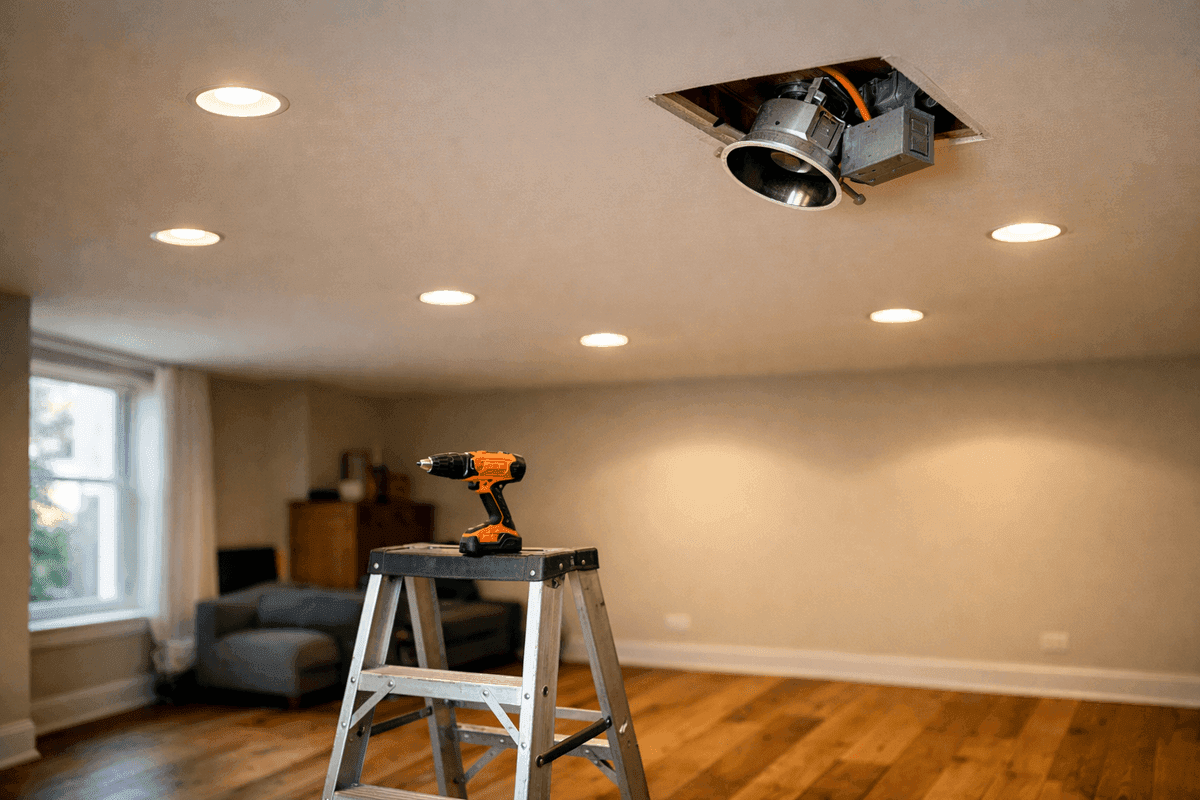
The architecture of Lincoln Park was designed around gas lamps and a handful of central pendants. Decorative plaster medallions, crown molding, and 9- and 10-foot ceilings look beautiful but leave a lot of real estate dark by modern standards. Recessed lighting lets homeowners light a restored Victorian parlor, a gutted kitchen, or a new primary suite without hanging fixtures from every ceiling plane. Owners doing gut rehabs near Oz Park and restorations along Armitage Avenue rely on recessed cans to deliver layered, dimmable light while preserving the original moldings they spent real money to save.
The high-end condo market tells a similar story. Converted two- and three-flats between Halsted and Clark have 9-foot ceilings, hardwood floors, and layouts that depend heavily on good light. A well-designed recessed plan — 2700K-3000K LED housings, tight-aperture trims, and an ELV dimmer per zone — elevates those units in a way bulb swaps never can.
Our Recessed Lighting Process in Lincoln Park
Every install starts with a walkthrough and a lighting plan. We look at ceiling construction (plaster, drywall, coffered, or sloped), insulation condition, joist direction, and existing circuits. In most Lincoln Park Victorians we specify airtight IC-rated remodel housings with low-profile LED modules — they sit flush with the finished ceiling, seal against attic air exchange, and cut cleanly into plaster without splintering the lath above.
From there we map fixture locations on the ceiling itself, confirm them with the homeowner or designer, and pre-drill pilot holes from below. We score the plaster with a diamond core bit before cutting the full opening, which keeps edges smooth and prevents the "starred" cracks that happen when plaster is attacked with a generic hole saw. Fishing cable through balloon-framed walls is standard in Lincoln Park; we use fiberglass rods and a proper attic or basement run-back plan so wall cavities stay intact. Every circuit change gets a Chicago electrical permit, and we leave the work ready for inspection.
Common Recessed Lighting Considerations in Lincoln Park
- Lath-and-plaster ceilings — The dominant ceiling type in pre-1910 Victorians. Requires diamond coring, tension-clip remodel housings, and careful hole sizing to avoid lath damage and future cracks.
- Landmark district review — Portions of Lincoln Park fall inside the Lincoln Park landmark district. Interior recessed lighting generally doesn't trigger review, but any associated exterior changes (new service, added meter) can.
- Knob-and-tube circuits overhead — Unrenovated upper floors may still have cloth K&T above the ceiling you want to core. Contact with insulation or new cans is a safety issue and usually requires abandoning and re-pulling the branch.
- Decorative plaster medallions — We lay out fixtures to complement plaster medallions, crown molding, and ceiling rosettes rather than centering cans over them.
- Dimmer compatibility — Lincoln Park's pre-2015 retrofits are full of leading-edge TRIAC dimmers driving modern LEDs. We replace with ELV or 0-10V dimmers matched to the specific driver to stop flicker and buzz.
Why Lincoln Park Residents Choose E&P Electric
Our owner holds a Supervising Electrician License — Chicago's highest electrical credential — and we carry full liability and workers' comp coverage. In Lincoln Park, finish quality carries as much weight as electrical performance. We work alongside the architects, designers, and general contractors active on high-end Lincoln Park rehabs, and we understand that a recessed installation is judged as much by the trim line as by the light output. Drop cloths go down on every hardwood floor, HEPA vacuums catch plaster dust at the cut, and we walk the homeowner through controls before we leave.
Get a Free Estimate Today
Serving Chicago and Chicagoland. Licensed and insured.