How to Prepare Your Electrical System for Chicago Winter | E&P Electric
Chicago winters are severe. Extended cold snaps, ice storms, and heavy snow create power outages lasting days. Electrical system failures during winter aren't just inconvenient—they're dangerous:
- Loss of heating: Dangerous, potentially fatal, especially for children and elderly
- Sump pump failures: Spring flooding from winter thaw
- Water pipe freezing: Without heating, pipes freeze and burst
- Carbon monoxide risk: Improper backup heating sources create poisoning hazards
- Health threats: Cold exposure, hypothermia
A well-maintained electrical system ensures your heating stays on, water stays flowing, and backup power is ready.
Winter Electrical Preparation Checklist
1. Generator Inspection & Maintenance
If you have a standby generator:
Monthly (October–December):
- ✓ Visual inspection: Check for damage, debris, animal nesting
- ✓ Fuel level: Propane tank (maintain at least 1/2 full)
- ✓ Natural gas pressure: Have E&P Electric verify (pressure drops in extreme cold)
- ✓ Battery voltage: Most generators have battery backup for starting; ensure it's charged
Quarterly (September):
- ✓ Professional service: Oil change, air filter, fuel additive
- ✓ Load test: Start generator and run under 50% load for 30 minutes
- ✓ Transfer switch test: Confirm automatic operation (ask E&P Electric to verify)
Propane tank winter preparation:
- Install tank pressure regulator (prevents freeze-off)
- Ensure tank is properly buried or above-ground with snow clearance
- Monitor propane supply (winter demand is high; plan refills accordingly)
- Schedule delivery before holiday season (many delivery services get backed up)
Natural gas generator:
- Verify gas line pressure doesn't drop in cold (ice formation upstream is rare but possible)
- Ensure exhaust pipe and intake aren't blocked by snow
- Confirm pilot light safety (E&P Electric verifies annually)
If you don't have a generator:
- Consider installation before next winter (demand increases as cold approaches)
- Generator installation typically takes 4–8 weeks; plan now for summer/fall scheduling
2. Heating System Electrical Check
Furnace & HVAC:
- ✓ Test furnace startup (run for 15 minutes, listen for normal operation)
- ✓ Check thermostat batteries (replace if low)
- ✓ Verify pilot light (if gas furnace)
- ✓ Inspect electrical connections for corrosion or looseness
- ✓ Confirm breaker for furnace is labeled and accessible
Heat pump systems (if applicable):
- Test emergency heat (aux heating) operation
- Verify electrical strip heaters work
- Ensure control board shows no error lights
Propane or oil heating:
- Verify fuel supply is adequate (schedule delivery early)
- Check electrical connections to burner controls
- Test ignition system
Action: Have HVAC professional service your system (separate from electrical, but coordinated).
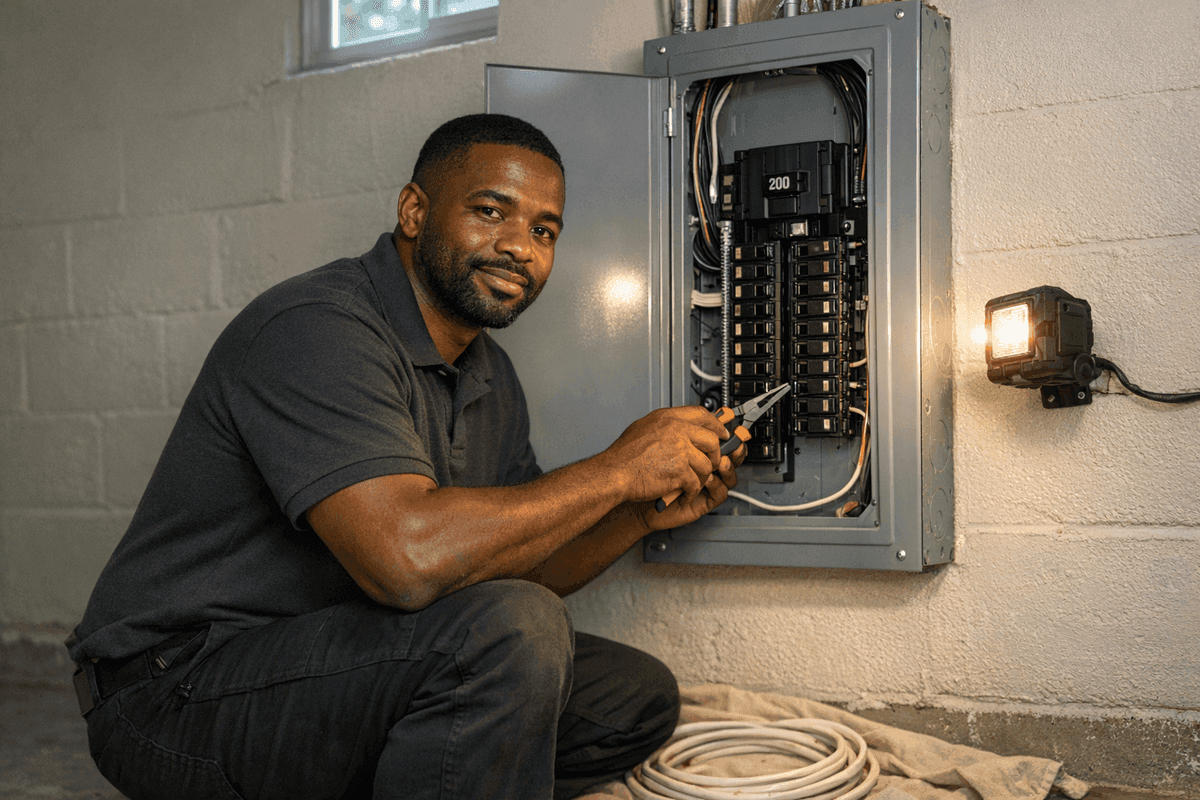
3. Electrical Panel & Breaker Inspection
Prevent outages during winter power stress:
Visual inspection:
- ✓ No corrosion (rust, discoloration) on breakers
- ✓ All breakers are in "ON" position (or proper position)
- ✓ No burning smell near panel
- ✓ Breaker handles move smoothly (not stuck)
- ✓ Panel area is dry (no water intrusion)
- ✓ Panel is accessible (not blocked by boxes, storage)
If you find issues:
- Corroded breakers: Call E&P Electric immediately (fire hazard)
- Stuck breakers: Have electrician replace
- Water near panel: Investigate water source; potential electrical hazard
Test critical breakers:
- Furnace: Switch to OFF then back ON (verifies breaker works)
- Sump pump: Same test
- Water heater: Same test
4. Sump Pump & Water System Check
Winter flooding prevention (spring melt risk):
Sump pump electrical:
- ✓ Test pump operation (pour water in sump, verify it activates)
- ✓ Check outlet it's plugged into (verify GFCI protection)
- ✓ Inspect cord for damage
- ✓ Ensure backup power option (battery backup or generator circuit)
Backup battery system (if installed):
- Test battery capacity (should run pump for 4–8 hours)
- Charge battery fully before winter
- Monitor battery health (some have indicators)
If you don't have backup sump pump power:
- Consider installing battery backup or generator circuit
- Installation: $500–$1,500 (peace of mind for spring thaw)
5. Space Heater Safety
Many Chicagoans use space heaters for supplemental warmth. Electrical fires are common:
Safe space heater use:
- ✓ Use heaters with automatic shutoff (overheat protection)
- ✓ Plug directly into wall outlet (NOT extension cord or power strip)
- ✓ Keep 3 feet clear around heater (flammable materials must be far away)
- ✓ Never leave running heater unattended
- ✓ Inspect cord for damage before using
Fire hazard warning signs:
- Outlet becomes warm or discolored
- Heater trips breaker (overload)
- Burning smell
- Heater stops working on certain outlets
Action: If heater trips breaker, the circuit is overloaded. Don't use that location. Call E&P Electric to assess circuit capacity.
6. Outlet & Switch Inspection
Winter moisture and condensation expose weak electrical connections:
Check every outlet and switch:
- ✓ Outlets fit plugs snugly (loose outlets are fire hazard)
- ✓ No discoloration or scorch marks
- ✓ No burning smell
- ✓ Switches operate smoothly (not stuck)
- ✓ 3-prong outlets have grounding pin intact
Bathroom & kitchen outlets (moisture-prone):
- Verify GFCI protection (press TEST button, outlet should lose power; press RESET to restore)
- Replace GFCI if test fails
- Check for condensation inside outlet cover plate (sign of moisture intrusion)
Exterior outlets:
- Verify weatherproof covers in place
- Check for water intrusion
- Test GFCI operation
7. Weatherproofing & Water Intrusion
Winter weather stresses electrical systems:
Check basement & crawlspace:
- ✓ No standing water (mold and electrical hazards)
- ✓ Outlets above water level (or weatherproof/GFCI protected)
- ✓ No moisture on wiring insulation
- ✓ Dehumidifier operating (if used)
Garage:
- Outlets protected from salt spray (snow melt + road salt)
- Weatherproof covers on exterior outlets
- Interior outlets protected if garage door is left open
Attic:
- Ensure no snow melting into attic (roof leak)
- Wiring insulation intact (condensation during freeze-thaw cycles)
- No animal nesting around wiring (mice chew insulation)
8. Portable Generator Safety (If Using)
If using portable generator during outage:
Safe operation:
- ✓ ALWAYS run portable generator OUTSIDE (never in garage, basement, or home)
- ✓ Keep 15+ feet away from windows, doors, vents (carbon monoxide hazard)
- ✓ Never connect directly to home wiring (electrocution and utility worker hazard)
- ✓ Use heavy-duty extension cords rated for wet conditions
- ✓ Plug lights and appliances directly into generator
- ✓ Never refuel while running (fire hazard)
Carbon monoxide warning:
- Generators produce CO, a colorless, odorless, deadly gas
- Running in garage/home kills occupants in minutes
- Install battery-powered CO detector as backup
Winter Electrical Hazards to Avoid
Ice & Snow on Power Lines:
Don't touch downed or damaged power lines. Call ComEd immediately (1-800-334-7661).
Frozen Outlet Covers:
Never force moisture into outlet. If covered in ice, let it melt naturally or call electrician.
Space Heater Overloads:
Older wiring can't support multiple high-draw appliances. Using microwave + space heater simultaneously often trips breaker. Turn off one, then on the other.
Frozen Pipes & Electrical:
If pipes freeze, don't use electrical heating cables without professional guidance (fire risk if not installed properly).
Professional Winter Inspection
Consider professional inspection before winter:
What E&P Electric checks:
- Generator load-test and fuel system verification
- Heating system electrical connections
- Panel condition and breaker operation
- GFCI/AFCI outlet testing
- Grounding and bonding verification
- Code compliance (especially for older homes)
- Water intrusion assessment
- Recommend upgrades (backup power, generator installation, circuit improvements)
Cost: $200–$400 (peace of mind for winter safety)
Winter Electrical Upgrades to Consider
Before first freeze (September–November):
- Generator installation: Standby or portable backup power ($3,000–$15,000 standby; $500–$2,000 portable)
- Panel upgrade: If you have 100-amp service (common in older Chicago homes), limited heating capacity ($2,000–$4,000)
- Sump pump backup: Battery or generator circuit ($500–$1,500)
- Water heater circuit: Dedicated circuit ensures reliable hot water ($300–$600)
- GFCI/AFCI upgrades: Bathroom and bedroom safety improvements ($150–$300 per outlet)
Winter Emergency Kit
Keep electrical supplies ready:
- Flashlights + extra batteries
- Battery-powered radio
- Portable phone charger
- Heavy-duty extension cords (outdoor rated)
- Adapters for various plug types
- Outlet covers (if using portable generator)
Related Services & Neighborhoods
Winter-adjacent services: [generator installation](/services/chicago/generator-installation-chicago), [whole-home surge protection](/services/chicago/whole-home-surge-protection-chicago), [electrical panel upgrade](/services/chicago/electrical-panel-upgrade-chicago), [dedicated circuit installation](/services/chicago/dedicated-circuit-installation-chicago), and [emergency electrician](/services/chicago/emergency-electrician-chicago).
We serve all Chicago neighborhoods including [Lincoln Park](/services/chicago/electrician-lincoln-park-chicago), [Logan Square](/services/chicago/electrician-logan-square-chicago), [Beverly](/services/chicago/electrician-beverly-chicago), [Morgan Park](/services/chicago/electrician-morgan-park-chicago), and [Portage Park](/services/chicago/electrician-portage-park-chicago).
Next Steps
Prepare your electrical system before Chicago's first freeze:
[Get a Winter Electrical Inspection] — Professional assessment of generator, panel, heating, and safety systems. $200–$400.
[Schedule Generator Maintenance] — Pre-winter service ensures your backup power works when needed.
[Call Now: (312) 219-3386] — Discuss winter electrical preparation with a licensed professional.
Emergency Number: If you lose power or suspect electrical hazard, call (312) 219-3386 for 24/7 response.
Get a Free Estimate Today
Serving Chicago and Chicagoland. Licensed and insured.