
Is My Home's Wiring Safe? Chicago Electrical Safety Guide | E&P Electric
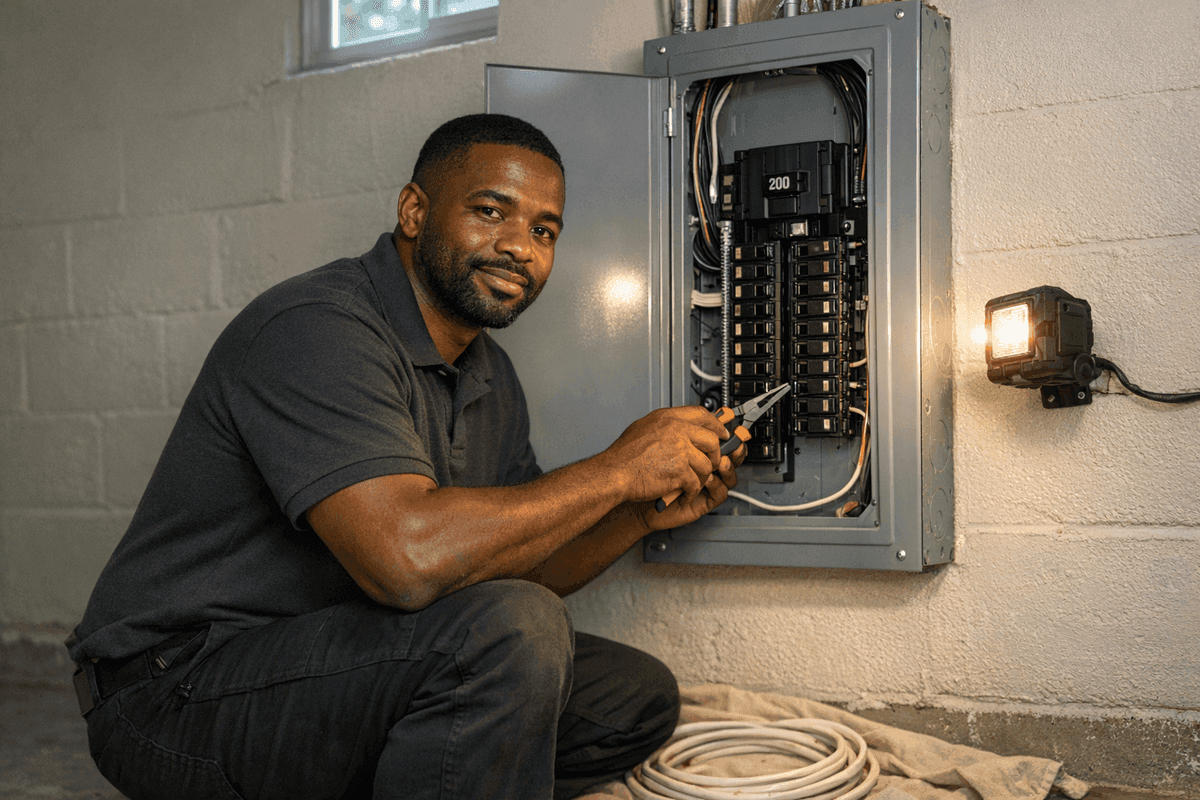
Your home's wiring is hidden behind walls and in your attic, making it hard to assess. But several signs reveal whether your electrical system is safe or at risk.
This guide helps you:
- Understand your home's wiring type and age
- Spot warning signs of unsafe wiring
- Know when professional inspection is needed
- Understand upgrade options
Home Wiring by Age: What Decade Means
Pre-1950s: Knob-and-Tube Wiring (DANGEROUS)
Common in older Chicago homes.
What it looks like:
- Cloth-insulated wire (looks like old fabric)
- Ceramic knobs (porcelain tubes holding wire)
- Two-wire system (no ground wire)
- Often visible in attic or basement
Safety assessment: UNSAFE
- Cloth insulation deteriorates, exposing bare wire (fire hazard)
- No grounding (shock hazard)
- Designed for low-power loads (modern appliances overload it)
- Insurance won't cover K&T homes (many won't cover fires caused by K&T)
Action: Replace immediately
- Professional full-home rewire ($8,000–$25,000+)
- Not a DIY project
1950s–1970s: Aluminum Wiring or Early Copper (CAUTION)
Common in Chicago homes from this era.
What it looks like:
- Aluminum wire (branching circuits): silver-colored wire from panel
- Early copper with cloth/paper insulation in some areas
- Fewer outlets than modern standards
Safety assessment: MARGINAL
- Aluminum wire overheats compared to copper (fire hazard)
- Connections corrode over time
- Earlier copper insulation may be deteriorating
- Older panels may be undersized for modern demand
Action: Professional inspection recommended
- Inspector assesses condition and deterioration risk
- Targeted replacement of problem areas
- Consider panel upgrade (likely undersized)
- Cost: Inspection $200–$400; repairs vary
Do not ignore: Aluminum wiring is a known hazard. Insurance may require inspection and repair.
1980s–2000s: Modern Copper (GENERALLY SAFE)
Common in homes built/renovated in this period.
What it looks like:
- Copper wire with plastic (PVC) insulation
- Three-wire system (hot, neutral, ground)
- Modern breaker panel
- Better outlet/switch spacing
Safety assessment: LIKELY SAFE
- Modern insulation (not cloth, long-lasting)
- Proper grounding (shock protection)
- Sized for typical electrical load of era
- May still need upgrades if you've added AC, heating, appliances since then
Action: Professional inspection when:
- Home was renovated (may have mixed wiring)
- You're planning major electrical work
- Suspected moisture damage
- Periodic maintenance (every 5–10 years if safe)
2001–Present: Modern Code Compliance (SAFEST)
New homes built to current electrical code.
What it looks like:
- Copper wiring with modern insulation
- Proper GFCI/AFCI protection
- 200-amp panel (modern standard)
- Surge protection, adequate outlets
- Ground rods, proper bonding
Safety assessment: SAFE (if properly installed)
- Built to current code
- Meets shock and fire safety standards
- Warranty on materials
Action: Routine inspection
- Still recommended every 5–10 years
- Watch for signs of deterioration
- Cost: Inspection $200–$400
Self-Check: How Safe Is Your Wiring?
Step 1: Determine Your Home's Age
When was your Chicago home built?
- Check deed, tax record, or ask realtor
- Look at construction quality (materials, outlets, fixtures)
- Rough estimates: small homes = older; larger homes = newer
Approximate age:
- Built pre-1950 = likely K&T (replace)
- Built 1950–1980 = likely aluminum or early copper (inspect)
- Built 1980–2000 = likely modern copper (inspect periodically)
- Built 2001+ = modern code-compliant (routine inspection)
Step 2: Inspect Visible Wiring
Attic inspection (with flashlight, careful not to touch live parts):
- ✓ Look for cloth insulation (deteriorated, discolored, falling apart)
- If found: K&T wiring, call electrician immediately
- ✓ Look for ceramic knobs and tubes
- If found: K&T wiring, call electrician immediately
- ✓ Look for aluminum wire (silver-colored, branching from panel)
- If found: Aluminum wiring, get inspection
- ✓ Look for modern plastic insulation (no cracks, discoloration)
- Good sign: Wiring appears safe
- ✓ Look for animal damage (chewed insulation, rodent nests)
- If found: May compromise insulation safety, inspect
- ✓ Look for moisture or water stains (on wiring, insulation)
- If found: Water intrusion may damage wiring, needs assessment
Step 3: Check Electrical Panel
Panel inspection (look, don't touch live parts):
- ✓ Panel age: Does it show date? Type of breakers?
- Modern breaker panel = safer
- Old panel = likely undersized
- ✓ Panel corrosion: Any rust, discoloration, green oxidation?
- Corrosion = moisture inside panel, potential hazard
- ✓ Panel temperature: Is panel warm to nearby surface?
- Warm panel = overheating, possible hazard
- ✓ Breaker operation: Do all breakers switch smoothly?
- Stuck breaker = possible failure, needs service
- ✓ Main breaker: Can you locate it? Is it labeled?
- Unlabeled = safety hazard (emergency access needed)
Step 4: Assess Outlets & Switches
Check throughout your home:
- ✓ Count outlets per room:
- Adequate (bedroom: 3-4, kitchen: 4-5, etc.) = good planning
- Sparse (1-2 per room) = old wiring, may be undersized
- ✓ Outlet types:
- All 3-prong (grounded) = modern, safe
- Mix of 2-prong and 3-prong = mixed wiring, may be old
- All 2-prong = very old, needs upgrade
- ✓ Outlets in wet areas (bathroom, kitchen):
- GFCI outlets (with reset button) = safe, code-compliant
- Standard outlets = code violation, needs upgrade
- ✓ Outlet condition:
- No discoloration, scorch marks = safe
- Yellow/brown discoloration, scorch = possible damage, needs inspection
- Loose outlets (plugs fit loosely) = wear, may need replacement
- ✓ Switch condition:
- Smooth operation = normal
- Sticky, hot to touch, burning smell = problem, call electrician
Step 5: Monitor for Warning Signs
Living in the home, notice:
- ✓ Flickering lights (when appliances run) = undersized circuit
- ✓ Frequent breaker trips = overloaded circuit or fault
- ✓ Warm outlets = loose connection or overload
- ✓ Burning smell = electrical hazard
- ✓ Buzzing from outlets/panel = loose connection, arcing
Any of these = call electrician within 24 hours to a few days
Professional Inspection vs. Self-Check
Self-Check Limitations
What self-checks can find:
- Visible K&T wiring
- Obviously deteriorated insulation
- Corrosion on panel
- Dead outlets
- Warning signs (burning smell, warm outlets)
What self-checks can't find:
- Hidden wiring damage (inside walls, underground)
- Internal panel problems
- Grounding integrity
- Code compliance
- Risk assessment by licensed professional
Professional Inspection Benefits
What electrician inspection includes:
- Comprehensive visual assessment
- Testing with tools (voltage, grounding, continuity)
- Code compliance verification
- Written report identifying hazards
- Repair recommendations prioritized by urgency
- Insurance documentation (if needed)
Cost: $200–$400 for residential inspection
When recommended:
- Pre-purchase (before buying home)
- Pre-sale (before selling home)
- After suspected damage (lightning, flooding)
- Periodic (every 5–10 years)
- If any warning signs present
Common Wiring Problems in Chicago Homes
Undersized Service
100-amp panel is too small for modern homes:
- Original K&T homes often have 100-amp service
- Modern demand often needs 200 amps
- Can't support AC + heating + modern appliances simultaneously
Signs:
- Frequent breaker trips
- AC struggles when heating runs
- Multiple appliances won't run together
Solution: Panel upgrade to 200 amps ($2,000–$4,000)
Mixed Wiring
Some homes have:
- Part K&T, part modern copper
- Part aluminum, part copper
- Mismatched connections (unsafe)
Solution: Full rewire or targeted replacement ($5,000–$30,000)
Moisture Intrusion
Water damage to wiring:
- Basement/crawlspace moisture
- Roof leaks dripping into attic wiring
- Exterior water infiltration near outlets
Signs:
- Corrosion on panel
- Outlet covers with moisture
- Musty smell near electrical areas
Solution: Repair moisture source, then assess wiring damage
Improper Grounding
Older homes may lack:
- Ground rods (safety outlet protection)
- Proper bonding (metal structures connected)
- Grounding wires (three-prong)
Solution: Grounding upgrade ($400–$1,500)
Wiring Upgrades: Common Scenarios
When Renting: Know Your Rights
Landlord is responsible for safe wiring. You can request inspection and repair.
See separate renter safety guide for details.
When Buying: Get Inspection
Part of due diligence:
- Get full electrical inspection before purchasing
- Budget for repairs if K&T, aluminum, or unsafe wiring found
- Ask about wiring as part of home inspection contingency
When Selling: Disclose Issues
Illinois law requires disclosure:
- Must tell buyers about known electrical issues
- K&T, aluminum wiring must be disclosed
- Previous electrical problems must be disclosed
When Renovating: Code Compliance
Any renovation triggers code compliance:
- Rewiring required for updated areas
- Modern GFCI/AFCI protection required
- Permits and inspections required
Age-Based Wiring Safety Checklist
| Home Age | Likely Wiring | Safety Risk | Action |
|---|---|---|---|
| Pre-1950 | Knob-and-tube | HIGH (fire, shock) | Replace immediately |
| 1950–1980 | Aluminum/early copper | MEDIUM (overheat risk) | Inspect, plan upgrades |
| 1980–2000 | Modern copper | LOW (if maintained) | Periodic inspection |
| 2001+ | Modern code-compliant | LOW (if properly installed) | Routine maintenance |
When Professional Inspection Is Essential
Don't delay:
- Pre-purchase inspection (before buying home)
- Any warning sign (warm outlet, burning smell, breaker trips)
- After damage event (lightning, flooding, fire)
- If age-based risk is high (pre-1950 home, never inspected)
- Selling home (disclose safety)
Inspection cost ($200–$400) is minimal compared to:
- Fire damage ($50,000–$500,000+)
- Electrical injury/death (priceless)
- Insurance complications (coverage denial)
Related Services & Neighborhoods
Safety assessments connect to: [electrical inspection](/services/chicago/electrical-inspection-chicago), [home rewiring](/services/chicago/home-rewiring-chicago), [knob-and-tube wiring replacement](/services/chicago/knob-and-tube-wiring-replacement-chicago), [aluminum wiring repair](/services/chicago/aluminum-wiring-repair-chicago), and [whole-home surge protection](/services/chicago/whole-home-surge-protection-chicago).
We perform safety inspections across Chicago neighborhoods including [Pilsen](/services/chicago/electrician-pilsen-chicago), [Humboldt Park](/services/chicago/electrician-humboldt-park-chicago), [Beverly](/services/chicago/electrician-beverly-chicago), [Bronzeville](/services/chicago/electrician-bronzeville-chicago), and [Marquette Park](/services/chicago/electrician-marquette-park-chicago).
Next Steps
Is your Chicago home's wiring safe?
[Get a Professional Electrical Inspection] — Comprehensive assessment by licensed electrician. $200–$400.
[Schedule Now] — (312) 219-3386 (especially urgent if pre-1950 home or warning signs present).
[Free Assessment Call] — Discuss your home's age, condition, and concerns. No obligation.
Get a Free Estimate Today
Serving Chicago and Chicagoland. Licensed and insured.