
Generator Installation in South Loop, Chicago
The South Loop's underground ComEd service infrastructure is generally more reliable than overhead-fed residential neighborhoods, but underground systems are not immune to outages. Infrastructure faults during heavy rain events, flooding in underground vaults, and equipment failures at substation level all create outages in the South Loop. When a building in the Printer's Row corridor or along South Michigan loses power, the impact on residents and commercial tenants is immediate.
Prairie Avenue's historic mansions — the Clarke House, Glessner House, and the surviving private residences along the protected block — represent some of Chicago's most important architectural assets. The large private homes that remain on Prairie Avenue, Calumet, and Indiana Avenues are being maintained and renovated by owners who take their investments seriously. These homes have the same generator needs as Beverly's historic homes: large square footage, aging mechanical systems, sump pumps, and the kind of premium contents — art, antiques, wine cellars — that need uninterrupted climate control.
The Printer's Row loft buildings — converted commercial buildings from the 1890s through the 1920s — have a different challenge. Their residential units are stacked in buildings that were designed for warehouses and printing facilities, not for residential occupancy. When power goes out, loft residents in buildings without building-wide backup have no emergency lighting, no elevator access, and no way to charge the devices they depend on.
Commercial ground-floor tenants in South Loop mixed-use buildings are also significant generator customers. A restaurant at the base of a residential tower depends on power for walk-in coolers and POS systems. When that power goes out without notice, the financial loss is immediate.
Our Generator Installation Process in South Loop
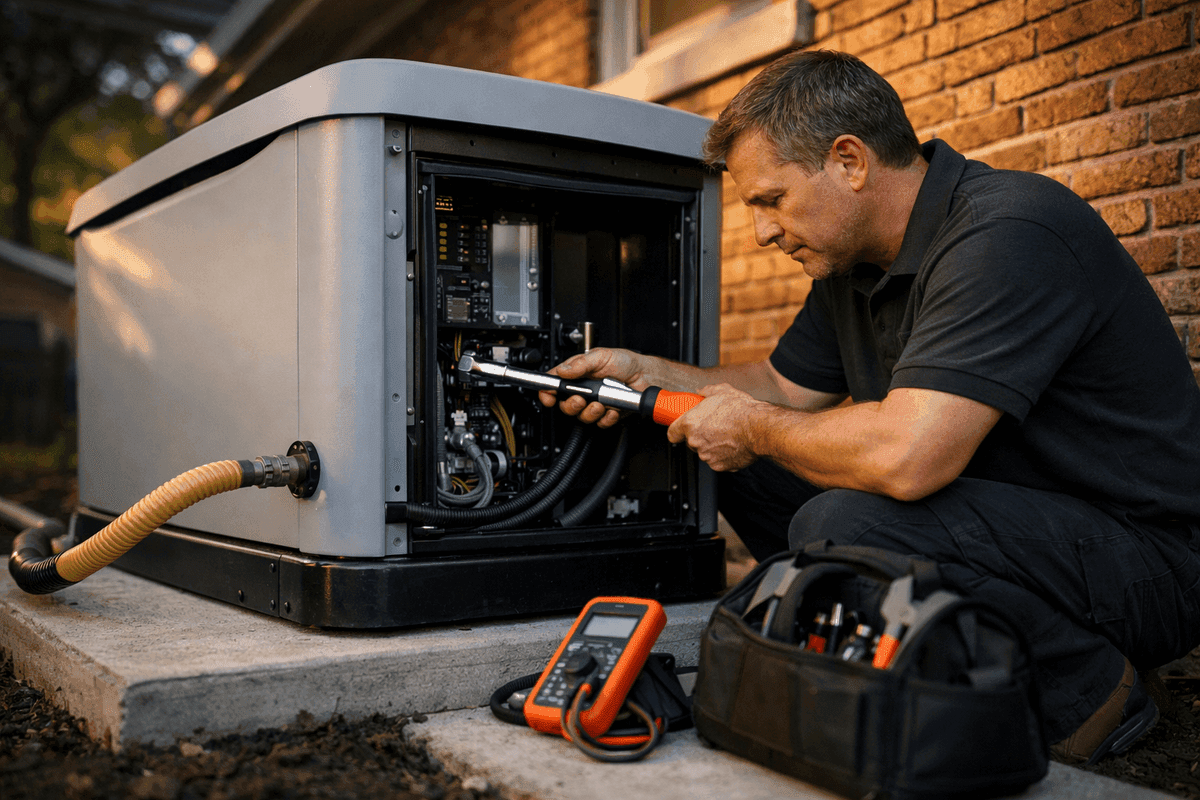
Generator installation in the South Loop depends entirely on the property type. For Prairie Avenue single-family homes and townhomes with rear yards, the installation follows the standard residential pattern: rear-yard pad, natural gas line from Peoples Gas, automatic transfer switch adjacent to the main panel, Chicago Department of Buildings permit. These properties typically need 22–30 kW units for larger homes.
For Printer's Row loft units and condo owners in residential towers, a whole-building approach is usually more practical than an individual-unit generator — standby generators for multi-unit buildings are installed in dedicated mechanical rooms or rooftop locations and require building engineer coordination and HOA approval. Individual unit owners who want backup power for a specific unit can use battery backup systems (not a standby generator) as an interim solution.
Commercial installations for South Loop restaurant and retail tenants follow commercial permitting — Chicago Department of Buildings commercial electrical permit, mechanical permit for the fuel connection, and coordination with the building's engineer and landlord. We size commercial generators based on the tenant's critical loads: walk-in coolers, emergency lighting, POS systems, and security cameras.
Common Power Outage Risks in South Loop
- Underground vault flooding — The South Loop's underground ComEd infrastructure is vulnerable to water intrusion during major rain events. Flooding in underground transformer vaults causes localized outages that can last several hours.
- Commercial walk-in spoilage — Ground-floor restaurants along Michigan, State, and the Printer's Row corridor face immediate financial loss from walk-in cooler failures during outages. A generator eliminates this risk.
- Prairie Avenue historic home needs — The large private homes remaining on the Prairie Avenue Historic District blocks have the same outage vulnerability as Beverly: overhead lateral service lines, finished basements with sump pumps, and premium contents requiring climate control.
- Loft building common-area failures — Printer's Row loft buildings without emergency backup systems lose common-area lighting, elevator service, and lobby security during any grid outage, regardless of duration.
- Medical and home office dependence — South Loop's high-income resident population includes a significant proportion of home offices, remote workers, and medically dependent residents for whom extended outages are not acceptable.
Why South Loop Properties Choose E&P Electric
We've worked the South Loop across all its property types — Prairie Avenue historic homes, Printer's Row loft conversions, ground-floor restaurant build-outs, and new-construction residential towers. Our team understands the different permitting paths for residential and commercial installations and how to navigate both the Chicago Department of Buildings and the HOA or property management approval process that South Loop projects often require.
Our supervising electrician license covers commercial and residential generator installations of any scale. We don't sub out components, and we handle every phase from site survey through permit closeout.
Get a Free Estimate Today
Serving Chicago and Chicagoland. Licensed and insured.