
EV Charger Installation in Lincoln Park, Chicago
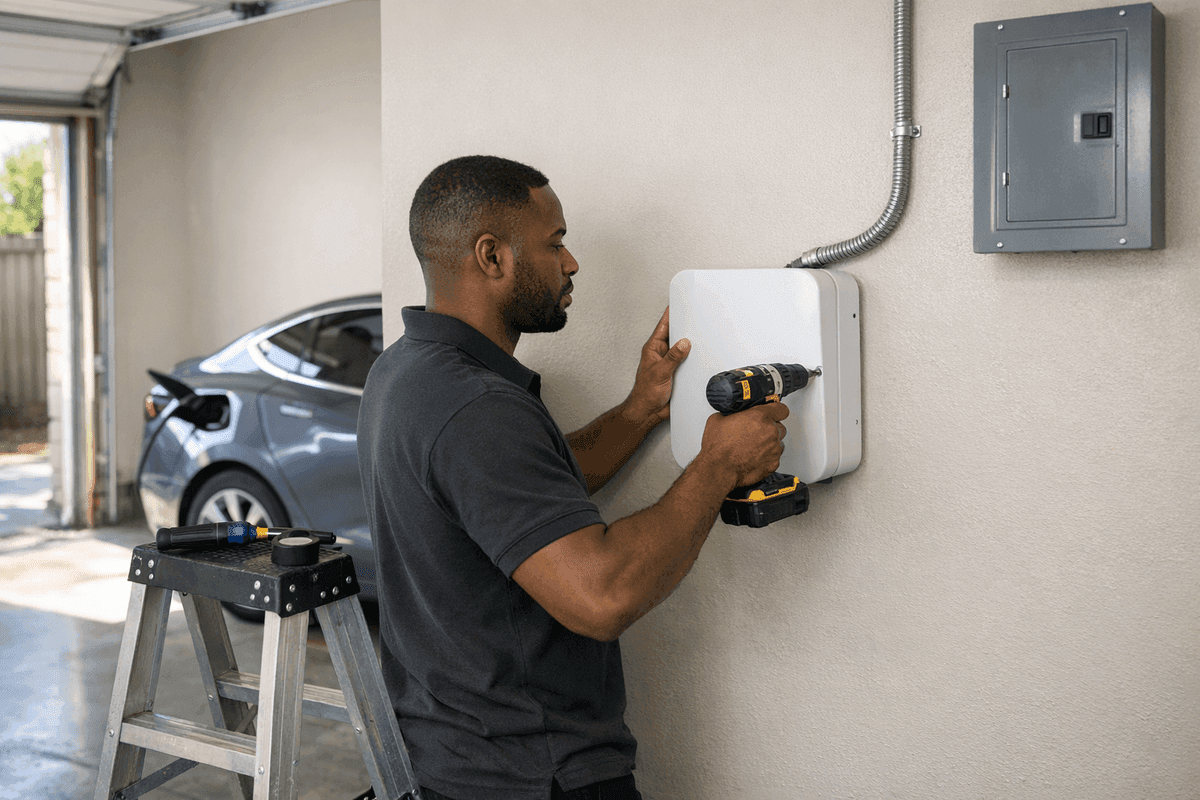
Lincoln Park's homeowners are among the most active EV adopters in Chicago. High household incomes, short urban commutes, and a strong sustainability culture in the DePaul and Oz Park areas have combined to make Lincoln Park one of the densest EV ownership neighborhoods in the city. The challenge is that the neighborhood's housing stock was built long before EVs existed.
Most Lincoln Park homes have detached two-car garages accessible from the alley — a classic Chicago layout. These garages range from fully electrified with a 100-amp sub-panel to barely wired with a single 20-amp circuit for a light and an outlet. Getting a Level 2 charger to that garage requires either running a new 60-amp circuit through an underground conduit in the alley right-of-way or upsizing an existing sub-panel feed. Many of the neighborhood's coach houses — common on streets like Cleveland, Howe, and Orchard — have separate panels that serve the coach house as an ADU, and the EV charger feeds off those.
For condo owners in the large converted three-flats and vintage apartment buildings along Clark and Halsted, EV charging is a different conversation. The building's parking structure or assigned indoor parking space may require HOA coordination, a building load study, and sometimes individual metering of the charger circuit.
Our EV Charger Installation Process in Lincoln Park
Our process starts with the panel — specifically, your main service size and available capacity. Lincoln Park homes are split between three common scenarios: pre-1960 homes with 100-amp service that may need an upgrade before adding a charger, post-renovation homes with 200-amp service that almost always have room, and new construction with 200-amp or 400-amp service that can support multiple chargers and still have room to spare.
Once we confirm capacity, we route the circuit. For detached garages accessed from the alley, we trench a conduit run from the basement panel to the garage sub-panel or directly to the charger mount. We coordinate the trench during the site-work phase of any renovation to avoid cutting through newly poured concrete or finished paver walks — a common scheduling mistake. For homes within the Lincoln Park Landmark District, we route meter additions and visible conduit to alley-facing walls and rear elevations to stay clear of landmark review triggers.
We install the charger, set up Wi-Fi connectivity for smart chargers, configure the app and charging schedule, and schedule the Chicago Department of Buildings inspection. The permit and final inspection are required for every new 240V circuit in Chicago — we handle both.
Common EV Charging Challenges in Lincoln Park
- Detached garage with no sub-panel — Many alley garages in Lincoln Park have only a 15- or 20-amp feed for lighting. Adding a Level 2 charger requires either a new sub-panel in the garage or a new home run back to the basement. We size the new feed for the charger plus garage loads, typically 60 amps minimum.
- Coach house with limited sub-feed capacity — Coach houses being used as ADUs have their own panels, but the sub-feed from the main house may be undersized. We evaluate the feeder, upgrade it if needed, and install the charger off the coach house panel so the EV circuits don't compete with the main home's loads.
- Condo parking in a shared building — Lincoln Park has hundreds of converted three-flats and multi-unit buildings. Shared parking requires HOA approval, a building load assessment, and often individual metering. We've handled this in numerous Lincoln Park condo buildings.
- Landmark district routing constraints — Exterior conduit visible from a street-facing elevation on a landmark-designated property can trigger Landmarks Commission review. We plan alley-side and rear-elevation routes as the default, keeping new conduit off the front of the house.
- Panel at capacity in pre-renovation homes — A 100-amp service running central AC, gas appliances, and modern appliances can often support a 32-amp Level 2 charger with load management. A 100-amp service with electric laundry or induction cooking needs a [panel upgrade](/services/chicago/electrical-panel-upgrade-chicago) before we add the charger. We run the NEC Article 220 load calculation before recommending either path.
Why Lincoln Park Residents Choose E&P Electric
Lincoln Park projects are rarely straightforward — there's almost always a landmark consideration, a tight alley, a contractor coordination question, or a coach house in the equation. Our supervising electrician license gives us the permit-pulling authority to manage the full scope, and our three decades of work in the neighborhood means we know the building types, the alley configurations, and the common service histories on blocks from Armitage to North Avenue.
We're also brand-agnostic on chargers. Whether you've already purchased a Tesla Wall Connector, a ChargePoint Home Flex, a JuiceBox Pro, or a Wallbox Pulsar, we install and configure all of them. Smart charger setup — Wi-Fi, app, scheduled charging to take advantage of ComEd off-peak rates — is included.
Rebate coordination is part of our process. ComEd and Illinois IEPA programs have offered residential EV charger incentives; we document the installation in a format that rebate programs accept.
Get a Free Estimate Today
Serving Chicago and Chicagoland. Licensed and insured.