
EV Charger Installation in Chicago
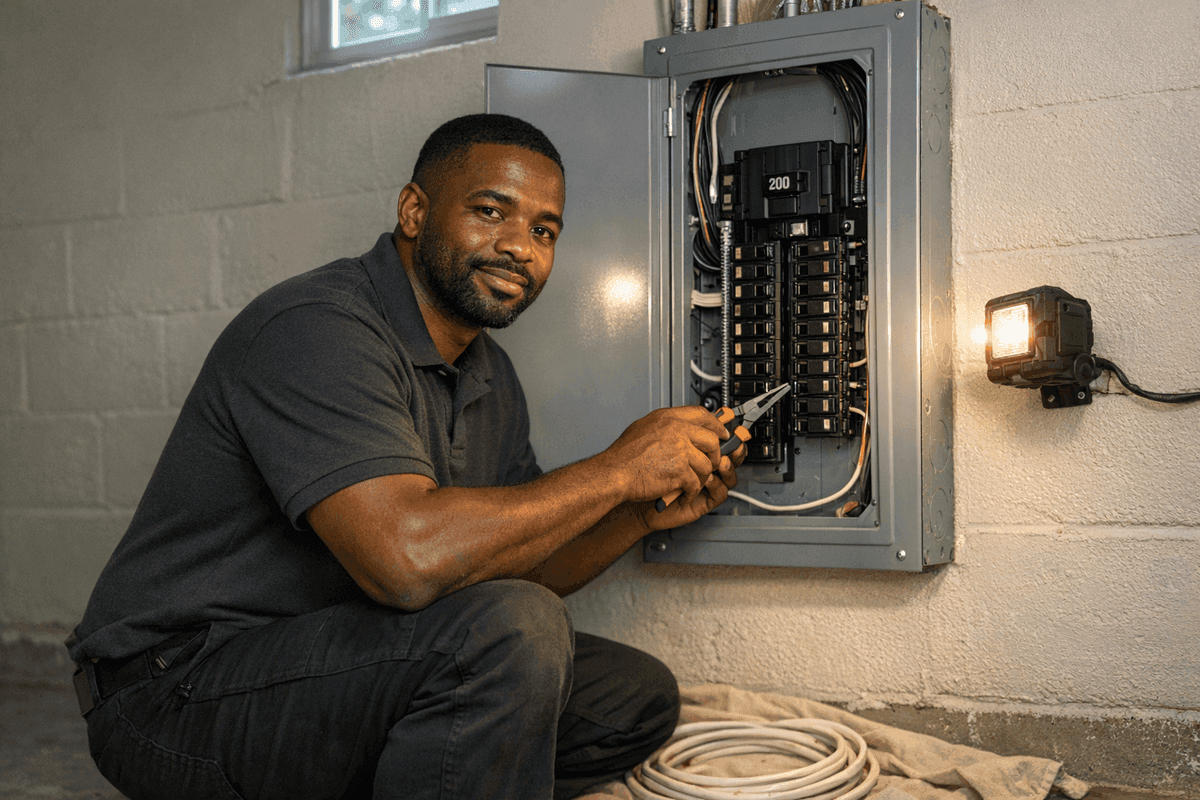
EV charger installation is the electrical work required to charge an electric vehicle at home — a dedicated 240V circuit, a wall-mounted charger (EVSE) or NEMA 14-50 receptacle, and the supporting permit and inspection work. For most Chicago homeowners, it means a Level 2 charger in the garage, driveway, or alley parking spot, delivering 25-40 miles of range per hour of charging — enough to fully replenish most commutes overnight.
Chicago EV charger installation has its own local character. Many Chicago homes have detached garages with their own subpanels — or with no subpanel at all. Many condo owners have parking in shared garages where charger installation requires HOA coordination. Many two-flats and three-flats have contested or complicated metering. And Chicago's conduit-based wiring methods mean every EV circuit gets pulled through EMT, not flexible cable. Done right, a home EV charger installation is a one-time investment that makes EV ownership effortless for the life of the vehicle.
Why Home EV Charging Matters
- Convenience: Plug in when you park; start each day at full charge
- Cost savings: Residential rates are typically a fraction of public DC fast-charger rates
- Time savings: No out-of-the-way stops at Electrify America or EVgo locations
- Battery longevity: Slower Level 2 charging is gentler on battery chemistry than repeated DC fast-charging
- Grid efficiency: Overnight charging uses off-peak capacity ComEd already has
- Property value: A clean, code-compliant EV installation is a selling feature
A homeowner with even a modest daily commute of 30 miles can meet nearly all charging needs overnight on a 40-amp Level 2 circuit.
Charging Levels Explained
Level 1 (120V Standard Outlet)
Plug into a regular outlet with the cord that came with the car. Adds about 2-5 miles of range per hour. Adequate for a plug-in hybrid or a very light commute. Not practical for most pure-battery EVs with daily commutes.
Level 2 (240V, 16A-80A)
The standard for residential home charging. Requires a dedicated 240V circuit and either a hardwired charger (EVSE) or a NEMA 14-50 receptacle. Adds 20-40+ miles of range per hour depending on circuit amperage and the vehicle's on-board charger. This is what 95% of our Chicago EV charger installs target.
DC Fast Charging (400V+)
Commercial-grade infrastructure that requires three-phase service and dedicated utility work. Not a residential installation. Think highway-rest-stop chargers, Tesla Superchargers, and dealer/service-bay installations.
Chicago Code and ComEd Requirements
- Dedicated 240V circuit: EV chargers cannot share with other loads
- Proper conductor sizing: 10 AWG for 30-amp, 8 AWG for 40-amp, 6 AWG for 50-amp (NEMA 14-50 receptacle); breaker sized at 125% of continuous load
- Chicago conduit methods: EMT for most residential routing
- Hardwired vs. receptacle: Hardwired installations avoid receptacle-overheating issues with high continuous current
- GFCI/GFPE protection: Required on most new EV installations
- Disconnect means: Proper accessible disconnect where the charger is far from the panel
- Weatherproofing: For outdoor installations, NEMA 3R or 4 enclosures
- Permit and inspection: Required through the Chicago Department of Buildings
- ComEd service coordination: For upgrades driven by EV charger installation
The EV Charger Installation Process
- On-site assessment — current service size, panel space, route planning
- Load calculation — NEC Article 220 to confirm service supports the charger
- Charger recommendation — matched to vehicle, home, and budget
- Service upgrade decision — is the existing service sufficient, or is [200-amp service](/services/chicago/200-amp-electrical-service-chicago) (or higher) the right call?
- Permit application — Chicago Department of Buildings
- Circuit installation — conduit run, conductor pull, breaker install
- Charger or receptacle installation — mounted, hardwired or plugged per spec
- Function test — voltage, grounding, charger communication with the vehicle
- Wi-Fi setup — for smart chargers with app control
- Final inspection — City of Chicago sign-off
A typical single-car garage installation takes four to eight hours once the circuit length is modest. Longer runs (detached garage with trenching, finished basement with drywall patching) take longer.
Service Capacity — The Big Question
A Level 2 EV charger pulls 32-48 amps continuous. On a 100-amp service, that's a meaningful fraction of total capacity. The right answer depends on your home:
- Home has 100-amp service and modest loads: Often fine — we'll run the load calc
- Home has 100-amp service and central AC + electric laundry: Often tight; [service upgrade](/services/chicago/electrical-panel-upgrade-chicago) recommended
- Home has 200-amp service: Almost always fine for one charger; two chargers may need load management
- Home has heat pump + EV + induction plans: Consider [400-amp service](/services/chicago/400-amp-electrical-service-chicago)
Many homeowners combine an EV charger installation with a panel upgrade — the permit, the ComEd coordination, and the conduit work overlap, so doing both at once saves time and money. See our [panel upgrade cost guide](/services/chicago/cost-guides/cost-panel-upgrade-chicago) and [EV charger installation cost guide](/services/chicago/cost-guides/cost-ev-charger-installation-chicago).
Smart Chargers and Load Management
Modern smart chargers (Tesla Wall Connector, JuiceBox, ChargePoint Home Flex, Wallbox Pulsar, Emporia, Enphase IQ, etc.) offer:
- Wi-Fi connectivity and app control
- Scheduled charging for off-peak rates
- Load sharing between multiple chargers
- Grid-responsive charging (following ComEd time-of-use rates)
- Energy monitoring
- OTA firmware updates
For homes with two EVs or marginal service capacity, load sharing is a real answer — two chargers can share a single 50-amp circuit intelligently.
Installation Locations
Attached Garage
Simplest routing — circuit from basement panel up through garage wall. Typical.
Detached Garage
Requires underground conduit to the garage and often a subpanel in the garage. Trenching and conduit stub-outs add scope.
Driveway Pedestal
Stand-alone pedestal requires underground conduit from the house. Common for homes with no garage.
Condo Parking Space
Requires HOA coordination, possible separate metering, and routing from the main service. We've navigated many condo EV installs in Chicago.
Coach House / ADU
Usually paired with a subpanel serving the coach house.
Cost Considerations
Pricing depends on:
- Charger model and cost
- Length and routing of the circuit
- Whether a service upgrade is needed
- Whether trenching, conduit, or drywall work is required
- Indoor vs. outdoor installation
- Permit fees
For detailed budget guidance, see our [EV charger installation cost guide](/services/chicago/cost-guides/cost-ev-charger-installation-chicago). Federal tax credits and ComEd EV rebates may apply — ask us about current programs.
Why Choose E&P Electric?
- ✓Supervising Electrician License
- ✓Load calculations done right
- ✓Chicago conduit expertise
- ✓Charger-agnostic
- ✓Smart setup included
- ✓Rebate help
Get a Free Estimate Today
Serving Chicago and Chicagoland. Licensed and insured.