
Electrical Meter Upgrade in Chicago
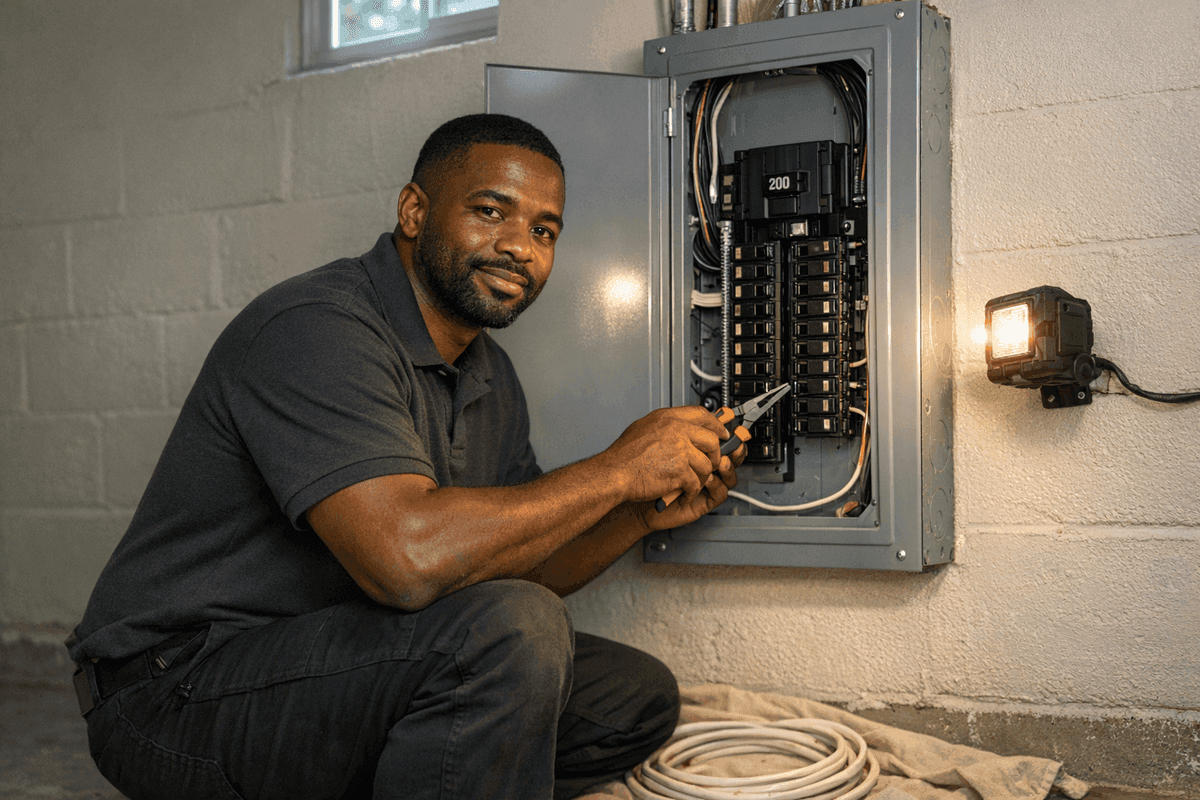
An electrical meter upgrade is the replacement of the meter socket (the enclosure on the outside of your home that holds the ComEd meter) and the associated service entrance components. Strictly speaking, the meter itself is ComEd's property — they install and own it. What we upgrade is the meter socket, the service entrance cable or conduit, and any related weatherhead or mast assembly. In practice, "meter upgrade" almost always happens as part of a larger service change — moving from 100-amp to 200-amp service, replacing a damaged meter socket, or coordinating with ComEd on a service that's been tagged for replacement.
Chicago has its own meter socket requirements per the ComEd Book of Standards. Sockets must meet specific continuous ratings, use approved manufacturers, and be installed at code-compliant heights and clearances. Getting this right is important because ComEd inspects and energizes — if the socket doesn't meet standard, ComEd won't close the loop, and your service stays dark.
When a Chicago Property Needs a Meter Upgrade
- Service upgrade from 100 or 150 to 200 amps — see [200-amp electrical service](/services/chicago/200-amp-electrical-service-chicago)
- Service upgrade to 400/320 amps for larger homes — see [400-amp electrical service](/services/chicago/400-amp-electrical-service-chicago)
- Damaged or obsolete meter socket — burn damage, corrosion, cracked cover, sun-degraded polycarbonate
- Vehicle impact — car hit the meter, wall damage
- Storm and weather damage — tree strike, ice damage, water intrusion
- Two-flat or three-flat metering reconfiguration — combining into single service, splitting into separately metered units
- Solar panel installation with net-metering meter requirements
- Meter socket flagged during inspection or ComEd service audit
- ADU or coach house requiring separate metering from the main home
If your service upgrade is on our books, meter socket upgrade is built into the scope. If it's a standalone socket replacement — often storm damage or ComEd compliance — we handle it directly.
Meter Socket Types and Configurations
Single Meter Residential
Standard for most single-family homes. A 200-amp single-position meter socket mounted on the exterior wall, fed from the overhead or underground service drop, feeding the main panel inside.
400/320 Meter Socket
For large homes, mansions, or properties with two 200-amp panels. A 400-amp continuous-rated socket that can feed two 200-amp mains.
Two-Flat / Three-Flat Meter Banks
Multi-meter socket configurations for separately metered units. Common in Chicago two-flats, three-flats, and six-flats. Each unit has its own meter and its own service to its own panel. See our [two-flat electrician page](/services/chicago/two-flat-electrician-chicago).
Ringless vs. Ringed Sockets
Chicago-area ComEd often requires ringless sockets (no meter ring, integrated cover). This differs from some suburban utilities. We install to current ComEd Book of Standards.
Overhead vs. Underground Service
Homes with overhead service have a weatherhead and mast carrying the service drop. Homes with underground service have a buried lateral feeding the socket from a pad-mounted or vault-mounted transformer. Each has different installation requirements.
Chicago Code and ComEd Requirements
Key requirements we address on every meter upgrade:
- Meter socket on an approved manufacturer list per ComEd Book of Standards
- Proper continuous rating for the service size
- Mounted at code-compliant height — typically 4 to 6 feet above grade
- Proper working clearance around the meter
- Grounding electrode system sized for the service — ground rods, water pipe bond
- Bonding of neutral and ground at the main disconnect
- Conduit size and type per Chicago Electrical Code
- Sealed conduit penetrations where weather intrusion is a concern
For a deeper look at the full service upgrade scope, see our [electrical panel upgrade page](/services/chicago/electrical-panel-upgrade-chicago) and [panel upgrade cost guide](/services/chicago/cost-guides/cost-panel-upgrade-chicago).
The Meter Upgrade Process
- On-site assessment of existing meter socket, service entrance, and panel
- ComEd service application submitted with service size and scope
- Permit pulled through the Chicago Department of Buildings
- ComEd disconnect scheduled for the day of installation
- Work performed: old socket removed, new socket installed, service entrance re-pulled or reused, grounding upgraded
- Chicago electrical inspection by a City inspector
- ComEd energization once the City releases the permit
- Post-work clean-up and documentation
For a single-family home, the total project — application to energized — is typically two to four weeks, most of it waiting on ComEd scheduling. Actual on-site work is usually one to two days.
Two-Flat and Three-Flat Metering
Chicago two-flats and three-flats often need metering reconfiguration during an upgrade. Common scenarios:
- Converting a shared common-area meter to separately metered units
- Adding a meter for a newly renovated coach house
- Combining stacked metering into a clean multi-meter bank
- Separating overlapping circuits between units
This work requires coordination between the electrician, ComEd engineering, and sometimes the tenants if work affects service continuity. We manage all three.
Why Choose E&P Electric?
- ✓Supervising Electrician License
- ✓ComEd relationship
- ✓ComEd Book of Standards compliance
- ✓Multi-unit expertise
- ✓Clean installations
- ✓Transparent pricing
Get a Free Estimate Today
Serving Chicago and Chicagoland. Licensed and insured.