
Dedicated Circuit Installation in Chicago
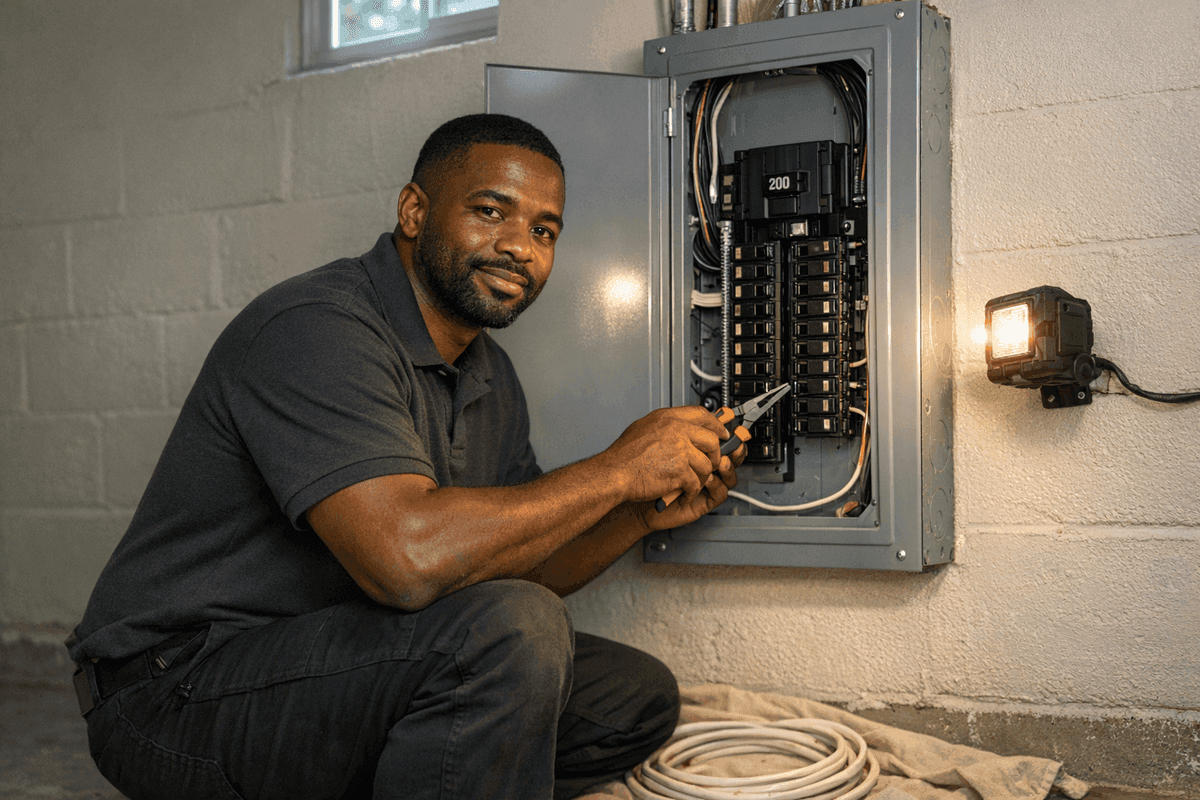
A dedicated circuit is an electrical circuit that serves one appliance, one outlet, or one piece of equipment — and nothing else. Instead of sharing a 20-amp general-purpose circuit with a handful of outlets, lights, and miscellaneous loads, a dedicated circuit runs its own conductor pair from the panel to its single device. The breaker, the wire, and the outlet (or hardwired termination) are all sized to match the load. A refrigerator on a dedicated circuit stays running when someone else overloads the kitchen. A Level 2 EV charger on a dedicated circuit delivers full current without tripping out mid-charge. A sump pump on a dedicated circuit keeps pumping when the basement freezer's compressor kicks on.
Chicago code — along with NEC and every major appliance manufacturer — specifies which equipment needs a dedicated circuit. We install new dedicated circuits daily for Chicago homeowners and businesses adding appliances, planning renovations, or solving nuisance-tripping problems.
When a Chicago Home or Business Needs a Dedicated Circuit
Common dedicated circuit requirements:
- Electric range or cooktop: 240V, 40-60 amps
- Wall oven: 240V, 30-50 amps
- Refrigerator: 120V, 20 amps — required by code when kitchen is renovated
- Dishwasher: 120V, 15 or 20 amps
- Garbage disposal: 120V, 15 amps
- Microwave (built-in or over-range): 120V, 20 amps
- Washing machine: 120V, 20 amps
- Electric dryer: 240V, 30 amps
- Electric water heater: 240V, 30 amps
- Heat pump or central AC: 240V, varies with tonnage
- Level 2 EV charger: 240V, 40-60 amps — see [EV charger installation](/services/chicago/ev-charger-installation-chicago)
- Hot tub or spa: 240V, 50-60 amps — see [hot tub and spa electrical](/services/chicago/hot-tub-spa-electrical-chicago)
- Sump pump or ejector pump: 120V, 15 or 20 amps, GFCI
- Space heater or permanent electric heat: 240V typical for installed heating
- Server rack or networking gear: 120V, 20 amps for sensitive electronics
- Freezer (secondary): 120V, 20 amps to prevent food loss from a shared-circuit trip
Why Dedicated Circuits Matter
- No nuisance trips: Running the vacuum doesn't kill the fridge
- Proper voltage delivery: No voltage sag when multiple loads start
- Code compliance: Many appliances require dedicated circuits by code
- Appliance longevity: Motors and compressors run on stable voltage
- Fire and overload safety: No overcurrent risk from piggy-backed loads
- Insurance and inspection: Inspectors flag shared circuits on major appliances
Adding a dedicated circuit is one of the highest-value electrical improvements per dollar — a single afternoon's work that eliminates a daily nuisance.
120V vs. 240V: What Your Appliance Needs
120V Dedicated Circuits
Used for refrigerators, dishwashers, microwaves, washers, sump pumps, and most plug-in appliances. Typically 15-amp or 20-amp, using 14 AWG or 12 AWG copper conductor. A standard duplex receptacle or a single receptacle dedicated to the appliance.
240V Dedicated Circuits
Used for electric ranges, electric dryers, electric water heaters, EV chargers, central AC, heat pumps, hot tubs, and welders. Typically 30-amp to 60-amp, using 10 AWG, 8 AWG, or 6 AWG conductor. Can be a 240V-only receptacle (NEMA 14-30, 14-50, 6-50, etc.) or a hardwired termination.
The outlet type matters — a 50-amp NEMA 14-50 for a range is physically different from a 50-amp NEMA 14-50 for an EV charger, even though they have the same configuration. The plug and receptacle must match the appliance cord.
Installation Process
- Appliance or device assessment — voltage, amperage, continuous vs. intermittent
- Panel evaluation — available space, overall capacity, load calculation
- Route planning — shortest safe path from panel to equipment location
- Wire sizing and type — conductor and conduit per Chicago Electrical Code
- Breaker selection — properly rated, manufacturer-matched, AFCI/GFCI where required
- Permit application — Chicago Department of Buildings
- Circuit installation — conduit run, conductor pull, terminations
- Device installation — receptacle, hardwired connection, disconnect where required
- Function test — voltage, polarity, grounding, appliance operation
- Final inspection — City of Chicago sign-off where permit required
A straightforward single-circuit run from a nearby panel is often a half-day job. A long run across a finished house with drywall patching takes longer. For multi-circuit kitchen projects, see [kitchen electrical remodel](/services/chicago/kitchen-electrical-remodel-chicago).
Kitchen Dedicated Circuits — A Special Case
Modern Chicago kitchens require multiple dedicated circuits by code:
- Two 20-amp small-appliance branch circuits serving countertop receptacles
- Dedicated refrigerator circuit (or combined with small-appliance by specific exception)
- Dedicated dishwasher circuit
- Dedicated disposal circuit (may be combined with dishwasher under certain conditions)
- Dedicated microwave circuit (for built-in or over-range)
- 240V range or cooktop circuit
- 240V wall oven circuit if separate from cooktop
A full kitchen circuit upgrade can mean six to eight new circuits. See our [kitchen electrical remodel page](/services/chicago/kitchen-electrical-remodel-chicago) for the complete picture.
What If My Panel Is Full?
Many Chicago homes have panels with no open breaker slots. Options:
Tandem (Twin) Breakers
Some panels accept tandem breakers — two breakers in a single slot — but only in specific positions, and only if the panel is approved for them. We verify the panel label and Chicago code allowance before installing tandems.
Subpanel
A subpanel fed from the main can add circuit capacity in a specific area of the home — kitchen, garage, basement, or addition. The subpanel feeder has to be sized for the total new load.
Panel Upgrade
The right answer when the service itself is undersized or the main panel is outdated. See [electrical panel upgrade](/services/chicago/electrical-panel-upgrade-chicago) and the [panel upgrade cost guide](/services/chicago/cost-guides/cost-panel-upgrade-chicago).
Why Choose E&P Electric?
- ✓Supervising Electrician License
- ✓Correct wire sizing and breaker selection
- ✓Clean installations
- ✓Code-compliant receptacle types
- ✓Permit and inspection handling
- ✓Transparent pricing
Get a Free Estimate Today
Serving Chicago and Chicagoland. Licensed and insured.