
Basement Electrical Wiring in Chicago
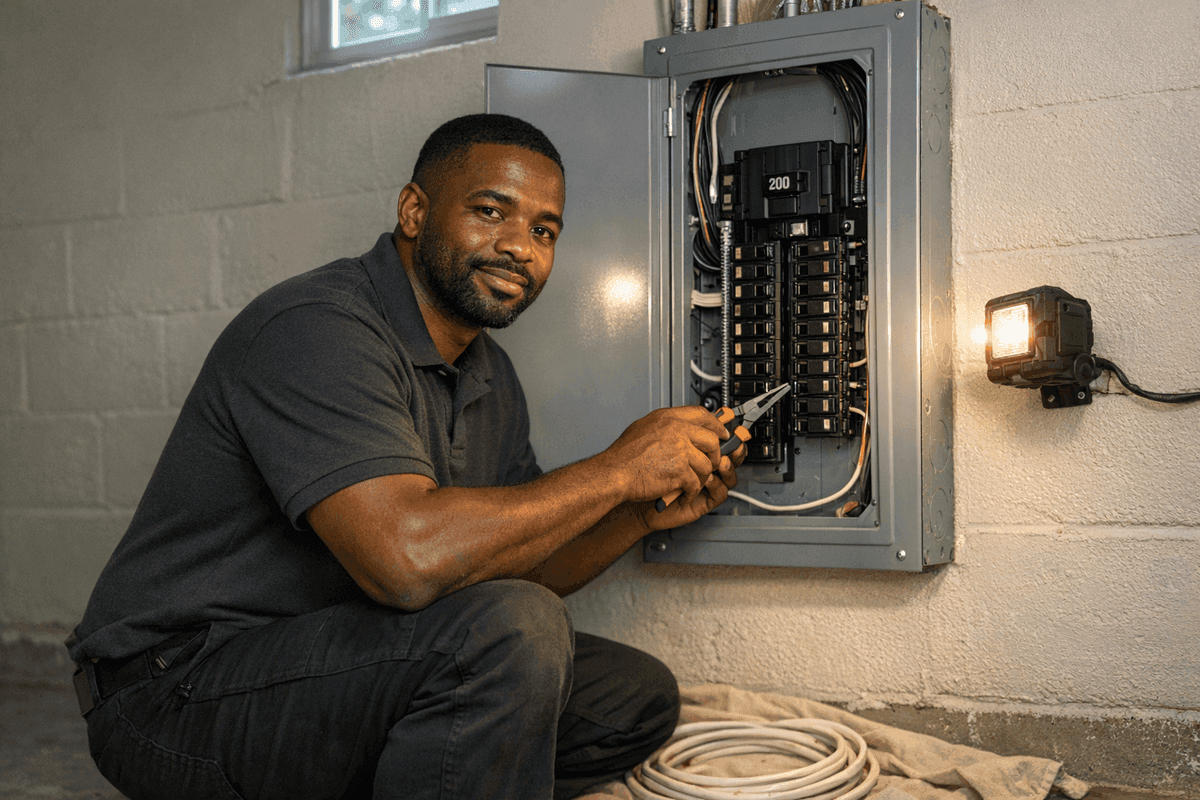
Basement electrical wiring covers everything from circuits, outlets, and lighting to dedicated equipment connections for sump pumps, ejector pumps, water heaters, and HVAC equipment in Chicago basements. Chicago basements are their own specialty. Many are below grade in neighborhoods with high water tables (Bridgeport, South Chicago, parts of the South Side near the lake), many are concrete-ceiling crawlspaces converted into useful living space over decades, and many were finished decades ago without permits or current code compliance. Doing basement electrical right means accounting for moisture, flooding risk, egress requirements, and the city's specific wiring methods for below-grade construction.
The Chicago Basement Problem
Chicago basements present challenges that suburban basements don't:
- Moisture and flooding: Many neighborhoods sit on clay soils with poor drainage; sump pumps and ejector pumps are essential, not optional
- Concrete block or poured walls: Running Romex through masonry isn't an option; most Chicago basement wiring goes in conduit
- Low ceilings and bulkheads: HVAC ducts, plumbing, and structural beams make clean wire paths difficult
- Mixed old and new wiring: A 1920s bungalow basement may have 1980s receptacles wire-nutted to 1940s knob-and-tube you didn't know was there
- Sump and ejector pump requirements: Code requires dedicated, GFCI-protected circuits for both
- Chicago conduit rule: Most Chicago basements require metallic conduit (EMT) rather than Romex
E&P Electric handles all of these realities daily.
Chicago Code Requirements for Basement Wiring
The Chicago Electrical Code (closely aligned with NEC but with city-specific amendments) requires:
- Conduit in most installations: Chicago requires electrical metallic tubing (EMT) or equivalent for most residential wiring methods, not just basements
- GFCI protection: All 120-volt, single-phase, 15- and 20-amp receptacles in unfinished basements must be GFCI protected; finished basement outlets also require GFCI in certain configurations
- AFCI protection: Bedroom and living area circuits in finished basement living space require arc-fault protection
- Dedicated sump pump circuit: GFCI protected, clearly labeled, often a single receptacle
- Egress lighting: Finished basement with habitable rooms requires code-compliant emergency egress windows and lighting
- Receptacle height: Receptacles in areas with flood potential should be installed at least 12 inches above the floor
- Bonding: All metal piping, conduit, and water service must be properly bonded
Typical Basement Electrical Circuits
- General-purpose receptacles: GFCI-protected, spaced appropriately for future furniture and equipment
- Sump pump circuit: Dedicated, GFCI-protected, installed near the sump basin
- Ejector pump circuit: Dedicated, for homes with below-grade bathrooms or laundry
- Laundry circuits: 20-amp circuit for the washer; 30- or 50-amp 240V for the dryer
- HVAC equipment: Furnace, air handler, or heat pump with proper overcurrent protection
- Water heater: 240V circuit for electric; 120V for gas models with ignition controls
- Dehumidifier: Dedicated outlet for the unit
- Basement lighting: Ambient ceiling lighting plus task lighting at the workbench or laundry area — see [light fixture installation](/services/chicago/light-fixture-installation-chicago) and [recessed lighting installation](/services/chicago/recessed-lighting-installation-chicago)
- Entertainment and tech: Media equipment, internet equipment, networking — increasingly common in finished spaces
Sump Pumps, Ejector Pumps, and Flood Resilience
In Chicago, sump pump failure means wet basement — sometimes catastrophically so. We install dedicated GFCI-protected sump pump circuits with proper overcurrent protection and clearly labeled disconnects. For homes in flood-prone areas (especially South Side neighborhoods near the lake and older North Side areas with combined sewer systems), we can also install:
- Backup battery sump pump circuits with dedicated charging
- Whole-home generators with a priority circuit for the sump pump — see [generator installation](/services/chicago/generator-installation-chicago)
- Water alarms and leak detection wired into the circuit
For finished basements with below-grade bathrooms, an ejector pump circuit is essential. We handle both pump wiring and the electrical side of the backflow valve where required.
Unfinished vs. Finished Basement Electrical
Unfinished basements need code-compliant wiring but can leave the work exposed in conduit. GFCI-protected general-purpose outlets, a dedicated sump pump circuit, furnace and water heater circuits, and utility lighting are typically enough.
Finished basements need complete residential-grade electrical design: receptacles spaced per code, AFCI-protected circuits in bedroom and living area spaces, proper egress lighting, smoke and CO detection on dedicated circuits, and often recessed lighting or sconce lighting. If you're finishing a basement for a guest suite, home theater, or ADU, see our [electrician for remodel](/services/chicago/electrician-for-remodel-chicago) and [home rewiring](/services/chicago/home-rewiring-chicago) pages.
Moisture Protection Done Right
- EMT conduit: Chicago requires it for most residential wiring; it also protects conductors from moisture and mechanical damage
- Weatherproof or damp-rated receptacles in areas with humidity or flood risk
- Sealed connections: Proper fittings at every conduit penetration
- Elevated installation: Receptacles 12 inches above floor in flood-prone areas
- GFCI protection: Rapid trip if a ground fault develops in a damp environment
What's Included in a Basement Electrical Project
- On-site assessment of existing wiring, moisture conditions, and intended use
- Circuit planning and load calculation
- GFCI and AFCI strategy per Chicago Electrical Code
- Sump pump and ejector pump dedicated circuits
- Furnace, water heater, and HVAC equipment connections
- General-purpose receptacles and dedicated circuits for appliances
- Lighting design appropriate to use
- Permit through the Chicago Department of Buildings
- Final electrical inspection
Timelines range from one to two days for a basic unfinished basement rough-in up to five days for a full finished-basement wiring package.
Why Choose E&P Electric?
- ✓Chicago code expertise
- ✓Moisture and flood experience
- ✓Permit-pulling authority
- ✓Clean installations
- ✓Transparent pricing
Get a Free Estimate Today
Serving Chicago and Chicagoland. Licensed and insured.